
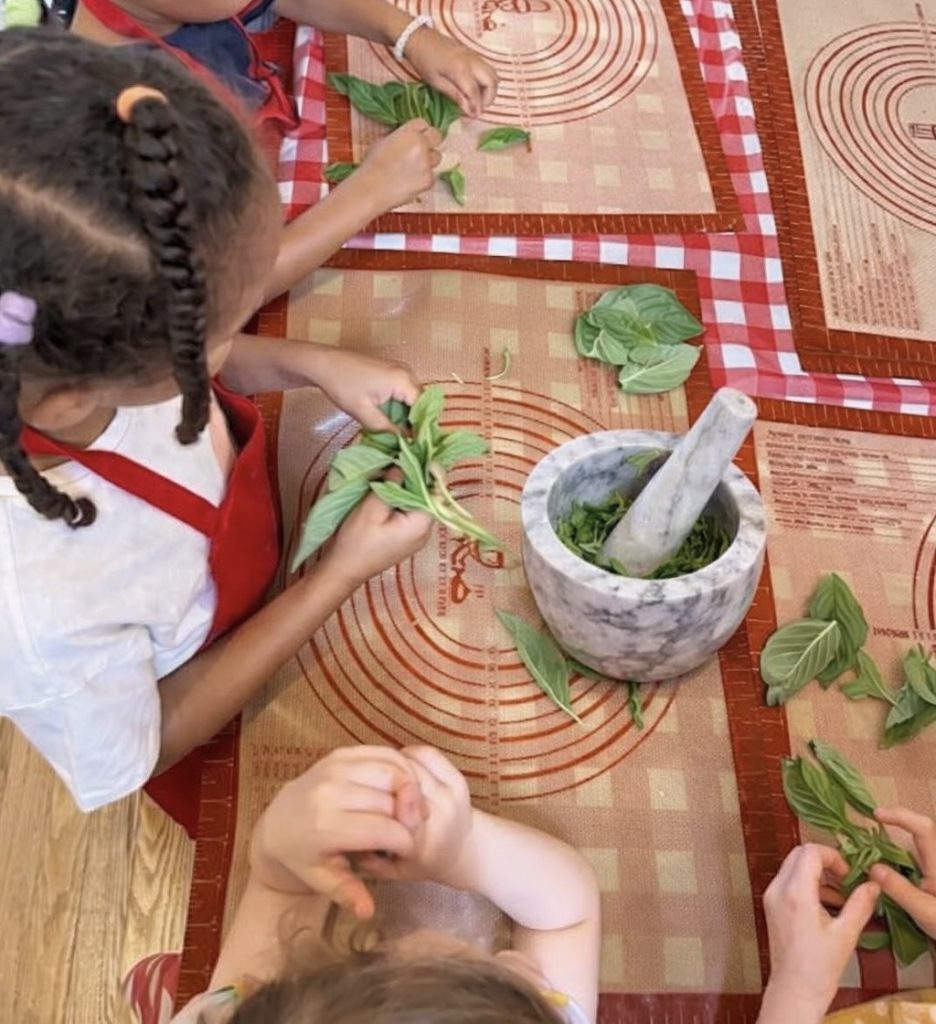
On Saturday, March 14, the Casa Italiana Zerilli‐Marimò, a cultural centre of New York University located on 24 West 12th Street, hosts the first Pesto Workshop for Youths, a practical workshop dedicated to children and children between 8 and 16 years. The event is part of the afternoon program “Casa Afternoons” and marks the launch of La Casa dei Ragazzi, a new series of educational activities organized in collaboration with So – Creative Cultural Center to bring young people closer to Italian language and culture through practical experiences.
The workshop is divided into two sessions: the first, from 15 to 16, for participants between 8 and 11 years; the second, from 16:30 to 17:30, for boys between 12 and 16 years. To lead the meeting is Gemma Carrani Richardson, founder of the gastronomic project Love, Annamaria, who introduces participants to the history and characteristics of one of the most recognizable condiments of Italian cuisine: the pesto alla genovese. During the meeting are explained the Ligurian origins of the recipe and the role of traditional ingredients – fresh basil, Parmigiano Reggiano, pecorino, pine nuts and extra virgin olive oil – as well as manual preparation techniques with marble mortar and pestle, historically used before the spread of domestic blenders.
The pesto, today one of the most widespread Italian sauces on an international level, is born in Genoa and in the coastal areas of Liguria at least from the 19th century, as an evolution of more ancient preparations based on aromatic herbs pestate. According to historical studies and cookbooks, the first modern description of the sauce appeared in 1863 in the book “La Cuciniera Genovese” by Giovanni Battista Ratto. In recent decades the pesto has become a product symbol of Italian cuisine in the world: Italy is one of the main exporters of ready sauces based on basil and in the United States the pesto is now permanently present in food and distribution, often also used in recipes that differ from Liguria tradition.
In the workshop participants work in small groups, tasting separately ingredients, recognizing aromas and consistencies and experimenting directly with the preparation of the sauce. The activity is conceived as a sensorial and didactic experience together: the boys observe the traditional process and prepare their own version of pesto, guided step by step. The initiative is part of the program La Casa dei Piccoli, a series of free events promoted by Casa Italiana Zerilli-Marimò and coordinated by the media and communication manager Chiara Basso, with the aim to offer children and families cultural activities that promote the learning and use of the Italian language through music, art and cuisine.
L’articolo A Casa Zerilli-Marimò is taught how to make pesto to young people proviene da IlNewyorkese.