
On 20 May, from 18:30 to 20:00, at the Casa Italiana Zerilli-Marimò the recital Baroque Meets Blue will put together the Italian baroque by Antonio Vivaldi and the American music by George Gershwin. The program, entrusted to pianists Anastasia Fioravanti and Alessandra Mostacci, is built for four-hand piano and starts from The four seasons to get to Rhapsody in Blue, passing through some of the best known songs of Gershwin. The title already explains the sense of the evening: bringing together a musical writing born in the 18th century Venetian with a nineteenth-century language raised between jazz, musical theatre, cinema and American urban culture.
The four seasons were published in 1725 and are the first four concerts of a wider collection, The Ciment of Harmony and Invention. They are among the best known compositions of Vivaldi also because they made an idea very recognizable: music can describe nature without need of words. In the concert program this passage is central. The spring contains the singing of the birds, the rest of the shepherd with the dog, the dance; the summer brings with it the storm and the restlessness; the autumn passes from the harvest to the hunt; the winter alternates wind, rain and a form of calm inside the cold. It is not only “descriptive” music, in the simplest sense of the term: it is a way to organize sounds, images and rhythm in a very precise narrative.
The second part of the program moves the center of gravity to the United States of the twentieth century, with George Gershwin and some of his most famous songs. Many were written with his brother Ira and belong to that repertoire that would later be called Great American Songbook, a sort of archive of the American song between Broadway, cinema, jazz and popular music. Summertime, composed in 1935 for the work Porgy and Bess, is perhaps the best known example: it has a structure that recalls the blues and has become one of the most performed and reinterpreted songs of the century. Next to this there are songs like It Ain’t Necessarily So, built as an ironic invitation not to accept absolute truths, A Foggy Day, They Can’t Take That Away From Me, Love Is Here to Stay and I Was Doing All Right, all linked in different ways to cinema, music theater and sophisticated writing of Gershwin.
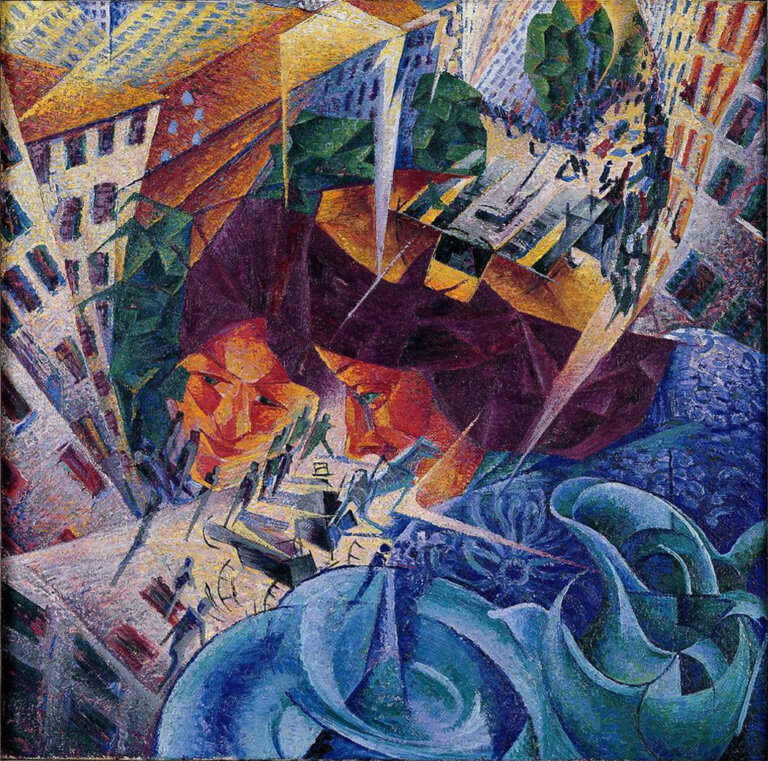
The arrival point is Rhapsody in Blue, first presented on February 12, 1924 at the Aeolian Hall in New York. It is one of the most famous compositions of Gershwin because it combines the form of concert music and the lexicon of jazz and blues. Its history has become almost part of the myth of the work: Gershwin performed it on the piano when the score was not entirely fixed, in front of an audience where there were musicians such as Fritz Kreisler, Igor Stravinsky, Sergei Rachmaninoff and Leopold Stokowski. In the context of Baroque Meets Blue, Rhapsody works as the American counterfield of Vivaldi: no longer the nature that speaks through music, but the modern city, especially New York, transformed into rhythm, movement and tension.
The two interpreters arrive at the concert with different but communicating routes. Anastasia Fioravanti, pianist and harpsichordist, began studying piano as a child, graduated very young at the Conservatory of Fermo and then continued the formation of academies, masterclasses and concert activities in Italy and abroad. Its path also includes the study of historical instruments, with a harpsichord diploma at the G.B. Conservatory. Martini di Bologna. Alessandra Mostacci, also pianist and harpsichordist, has a long career between concerts, recordings and collaborations that cross very different repertoires, from classical to contemporary music, to more experimental projects with Roberto “Freak” Antoni of the Skiantos. This double competence, between piano and historical keyboards, makes the arrangement between Vivaldi and Gershwin less casual: it is not only a “contrast” program, but a way to show how two distant traditions can be reinterpreted through the same instrument and the same musical gesture.
L’articolo Vivaldi e il jazz, insieme, alla Casa Italiana Zerilli-Marimò proviene da IlNewyorkese.