
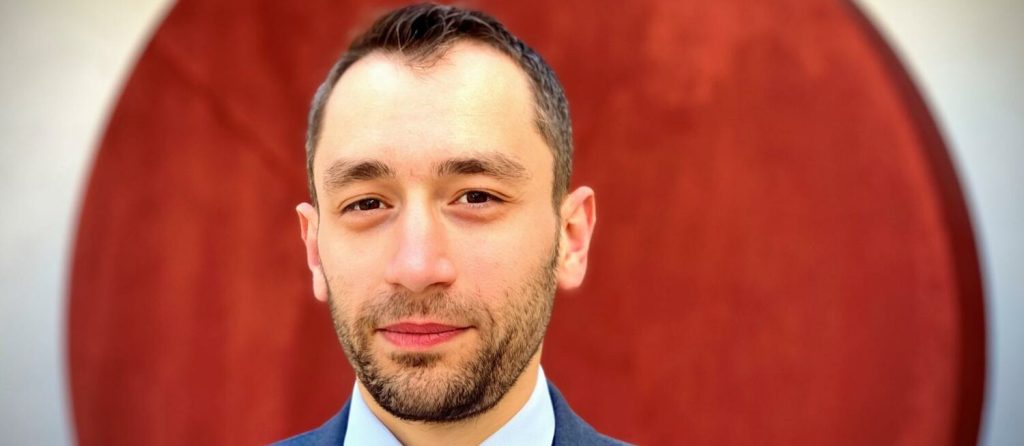
At the head of the Italian Cultural Institute in Los Angeles, the director tells the challenge to promote Italy in a metropolis that produces planetary imaginary. Between cinema, design, language and new generations, the mission is clear: to make Italy not a passing guest, but a stable interlocutor in the cultural system of Los Angeles.
What are today the main activities that the Italian Institute of Culture is carrying out in Los Angeles?
The Italian Cultural Institute of Los Angeles is today a cultural platform that operates on multiple levels. On the one hand there is the “classic” programming: exhibitions, cinema shows, concerts, literary meetings, dialogues on design and architecture. On the other hand there is a less visible but equally fundamental work: the construction of networks, partnerships and collaborations structured with universities, museums, festivals, creative institutions and productive realities of the territory.
In recent years we have worked a lot to make the Institute not only a place of events, but a stable node in the cultural system of Los Angeles. This means dialogue with the academic world, with the audiovisual industry, with the design sector and with the Italian-American community, but also intercept new publics, especially the new generations. For us it is essential to involve students, young professionals, emerging creatives: not only as spectators, but as active interlocutors. We organize meetings in universities, we program events that speak the language of contemporary and try to build concrete opportunities for comparison and networking.
A central axis remains the promotion of the Italian language. The courses we offer are not simply an educational service: they represent a long-term cultural investment. Each student is a potential bridge between Italy and the United States. Around the language we build cultural activities, presentations, meetings with authors, interdisciplinary projects that strengthen the idea of Italian as a living language, able to speak to the present.
What is the mission of the Italian Institute of Culture?
The Italian Institute of Culture is an instrument of Italian cultural diplomacy. It is part of the network of the Ministry of Foreign Affairs and International Cooperation, which has over 80 Italian Institutes of Culture worldwide, distributed in the main partner countries of Italy.
Our mission is to promote Italian culture abroad and promote dialogue between Italy and the host country. Promoting culture does not simply mean “exporting” content. It means creating relationships, facilitating exchanges between artists, scholars, professionals, students; supporting the circulation of ideas; accompanying projects that generate concrete collaboration.
In a city like Los Angeles, this mission takes on a particular dimension. Here we operate in a global creative ecosystem, where what is born can have an immediate international impact. Entering into this context means dialogue with the cultural industry, with the academic world, with creative platforms that influence the global public speech. Our task is to ensure that Italy is part of this conversation, not as an occasional guest, but as an authoritative and continuous interlocutor.
What makes Los Angeles different from other cities in the world culturally?
Los Angeles is a deeply polycentric city. There is no single cultural center, but a constellation of spaces, communities, universities, museums, creative studies and neighborhoods with strong and distinct identity. This fragmentation is actually a wealth: it allows many voices to coexist and generate contamination.
It is also a city producing global imaginary. What is born here – especially in cinema, but also in music, visual arts and the world of content creation – often affects the whole world. But Los Angeles is not only entertainment industry: it is also research, experimentation, technological innovation and academic reflection.
For an Institute of Culture this means working in a highly competitive but also extremely dynamic context, where quality, credibility and ability to build alliances are fundamental.
In a city that is a symbol of the entertainment industry, is attention focused on cinema and music?
Cinema and music are inevitably central. It would be myopic not to recognize him. Audiovisual is the common language of this city and represents a privileged channel to tell contemporary Italy.
However, limiting itself to this would be reduced. We have invested a lot in architecture and design, in photography, in visual arts, in interdisciplinary dialogues that connect culture and topicality – from food to sustainability, from science to sport. The goal is to offer an image of Italy consistent with its reality: a country where heritage and innovation live, and where tradition is always reinterpretation.
How did you get to Los Angeles and what was your professional path to here?
I started my journey to the Ministry of Foreign Affairs and International Cooperation in 2014 and I was able to work immediately in the cultural field. Before arriving in Los Angeles in January 2022, I had the honour of running the Italian Cultural Institute in Washington.
Cultural diplomacy builds bridges and creates confidence. Its results are not always immediate, but in the long term they are deep and lasting. It is a strategic component of Italian foreign policy: it sows relationships, consolidates dialogues, strengthens the presence of the country through culture, which remains one of the most effective and credible tools to talk about our identity and our values.
What personal relationship do you have with this city?
Los Angeles is a city that testifies you. Distances are physical, but also symbolic. It is a big, competitive city that requires energy and constancy. But precisely for this, when a project works, when a collaboration takes shape, the satisfaction is enormous.
LA is also a city of meetings and possibilities. In Los Angeles it can happen that a conversation quickly turns into a concrete initiative. This ability to accelerate, this opening to the new, is one of the aspects I have learned to appreciate more.
What do you like most about Los Angeles?
I’m impressed by her mental openness. There is no single dominant cultural canon here. There is room for experimentation, for dialogue between disciplines, for unexpected contaminations.
I also like the international dimension: talking about Italy in Los Angeles means talking to an extremely diverse audience, with different cultural backgrounds. It is an extraordinary gym that obliges you to be clear, credible and contemporary.
What are the projects carried out in these years of which you are more proud?
I am particularly proud of the projects that have been able to generate continuity and dialogue over time. I am thinking, for example, of the exhibition dedicated to the Renzo Piano Building Workshop, which has interwoven architecture, cinema and city, highlighting the work of one of the great protagonists of contemporary Italian architecture and involving professionals, academics and interlocutors related to the Academy Museum. It was a concrete way to value one of the many Italian tracks in the Californian urban fabric.
This exhibition was not only an exhibition, but a moment of reflection on the contribution of Italian architecture to the transformation of the public space of Los Angeles and, more generally, on the dialogue between Italian creativity and American cultural landscape.
I am also proud of the cinema programs that have approached the professional audience and industry to contemporary Italy, as well as initiatives related to language, which have consolidated an active and participatory community. In the end, true satisfaction does not reside in the single event, but in the network of relationships, collaborations and opportunities that this event manages to generate and grow over time.
The Institute was the protagonist of the main Italian film festivals in Los Angeles: how did the recent editions of Filming Italy and Los Angeles Italy go?
Recent editions have confirmed the role of Los Angeles as a strategic hub for Italian cinema. Over the years, both festivals have built an effective dialogue between creativity and industry, involving audiences, workers and new generations.
They continue to represent an important showcase for our cinema, with a strong ability to attract media and professional attention. The added value, however, lies in the relational dimension: not only projections, but meetings, conversations, concrete opportunities for collaboration. This is what we strive to do with every activity promoted by the Institute.
You have hosted artists like Giovanni Allevi, celebrated Anna Magnani and the star on the Walk of Fame by Franco Nero: what value do these symbolic moments have?
They are highly symbolic moments, but never end up in themselves. Figures such as these represent a shared heritage and an immediate access point to the Italian imagination.
The star of Franco Nero on the Walk of Fame goes beyond personal recognition: it is the visible testimony of a cultural dialogue between Italy and the United States that has lasted for decades. These moments reaffirm the Italian presence in American public space and strengthen the awareness of a historical and contemporary link between the two countries.
How is Italianity felt today in Los Angeles and the United States?
Italy is perceived in an extremely positive way: quality, creativity, style, cultural heritage. It is an important reputational capital.
The challenge is to continually update it. Next to iconic Italy we must tell Italy about research, innovation, young artists and new languages. Only in this way the cultural presence remains alive, credible and relevant in time.
L’articolo Emanuele Amendola tells the role of Italy in the cultural system of Los Angeles proviene da IlNewyorkese.