
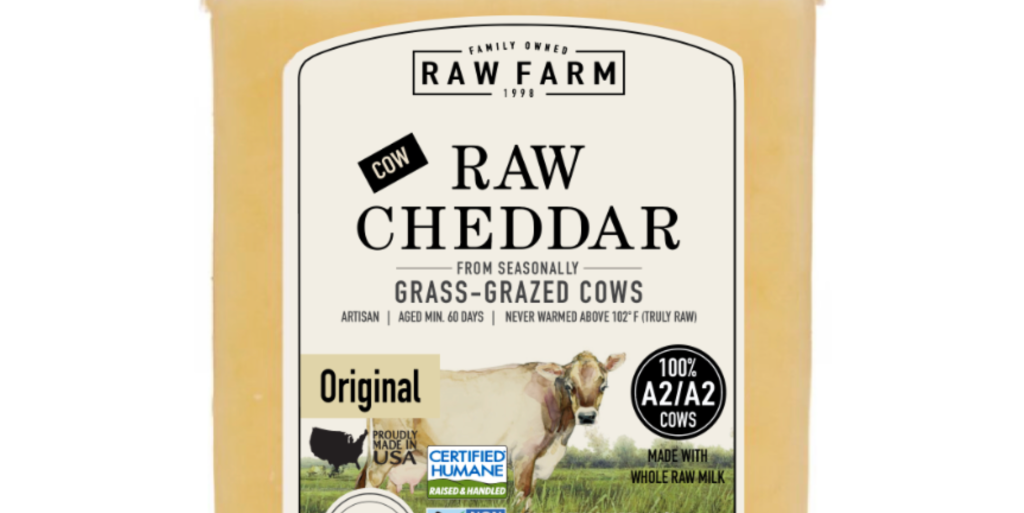
Federal and state public health officials are investigation a coast-to-coast outbreak of E. coli O157:H7 infections traced to raw milk cheese from RAW FARM LLC.
The Food and Drug Administration has recommended that RAW FARM LLC voluntarily remove their raw cheese products from the market, but the firm has refused to do so. The farm’s raw milk products have been linked to several foodborne illness outbreaks in recent years.
So far there are seven confirmed patients, two of whom have been hospitalized. The sick people live in California, Florida and Texas. Illness onset dates range from Sept. 1, 2025, to Feb. 13, 2026. The implicated cheddar cheese was distributed nationwide.
Whole genome sequencing analysis of E. coli isolates from the ill people shows that they are all closely related genetically to each other. This means that people in this outbreak are likely to share a common source of infection. Additionally, 4 of 7 cases are 3 years old or younger. Two patients have been hospitalized. No deaths or HUS cases have been reported.
State and local public health officials have interviewed 3 ill people about food exposures of interest in this outbreak. All 3 people reported eating RAW FARM- brand raw cheddar cheese. State and local officials are working to gather additional data for the 4 other illnesses.
Epidemiologic evidence indicates that RAW FARM-brand raw cheddar cheese products made by RAW FARM LLC are the likely source of this outbreak.
The investigation is ongoing to determine the source of contamination and whether additional products are linked to illnesses. As part of this investigation, state officials initiated collection of product samples for testing and analysis, but results are not yet available.
Previous outbreaks and recalls associated with RAW FARM products.
DateProductContaminantRecall/IllnessesSeptember 2006Raw MilkE. coli O157:H7Six ill, two with Hemolytic Uremic Syndrome September 2007Raw CreamListeria monocytogenesRecall IssuedDecember 2007Raw MilkCampylobacterEight Illnesses September 2008Raw CreamCampylobacterRecall IssuedNovember 2011Raw MilkE. coli O157:H7Five ill, three with Hemolytic Uremic SyndromeMay 2012Raw Milk/CreamCampylobacter10 Illnesses October 2015Raw MilkCampylobacterRecall IssuedJanuary 2016Raw MilkE. coli O157:H7Nine ill, two with Hemolytic Uremic SyndromeMay 2023Raw MilkCampylobacterRecall IssuedAugust 2023Unpasteurized Cheese SalmonellaRecall IssuedDecember 2023Raw MilkSalmonella19 IllnessesOctober 2024Raw MilkSalmonella171 IllnessesDecember 2024Unpasteurized CheeseE. coli O157:H711 illnesses
About E. coli infections
Anyone who has eaten any RAW FARM raw milk cheddar cheese and developed symptoms of E. coli infection should seek medical attention and tell their doctor about their possible exposure to the bacteria. Specific tests are required to diagnose the infections, which can mimic other illnesses.
The symptoms of E. coli infections vary for each person but often include severe stomach cramps and diarrhea, which is often bloody. Some patients may also have a fever. Most patients recover within five to seven days. Others can develop severe or life-threatening symptoms and complications, according to the Centers for Disease Control and Prevention (CDC).
About 5 to 10 percent of those diagnosed with E. coli infections develop a potentially life-threatening kidney failure complication, known as a hemolytic uremic syndrome (HUS). Symptoms of HUS include fever, abdominal pain, feeling very tired, decreased frequency of urination, small unexplained bruises or bleeding, and pallor.
Many people with HUS recover within a few weeks, but some suffer permanent injuries or death. This condition can occur among people of any age but is most common in children younger than five years old because of their immature immune systems, older adults because of deteriorating immune systems, and people with compromised immune systems such as cancer patients.
People who experience HUS symptoms should immediately seek emergency medical care. People with HUS will likely be hospitalized because the condition can cause other serious and ongoing problems such as hypertension, chronic kidney disease, brain damage, and neurologic problems.