
More than 100 people have fallen sick from foodborne illnesses in Hong Kong so far this year with the majority getting ill after eating oysters.
The Centre for Health Protection (CHP) of the Department of Health said the elderly, pregnant women, children and those with weakened immune systems should not eat raw oysters and undercooked bivalve shellfish as they are at higher risk of developing complications if infected with norovirus.
CHP has recorded 45 food poisoning clusters, affecting 53 men and 82 women aged between 15 and 75. Nearly 90 percent were associated with norovirus, affecting 113 people.
Epidemiological investigations found that all norovirus cases had consumed raw oysters during the incubation period. Six people required hospitalization, but they are all in a stable condition.
“The number of food poisoning cases recorded over the past few weeks has continued to rise, increasing from an average of one case per week in late December to an average of four cases per week in January,” said Dr. Edwin Tsui, controller of the CHP.
“As oysters feed by filtering, a large volume of seawater and pathogens can accumulate in them if they are grown in or harvested from contaminated water. During the Lunar New Year, people usually gather for meals with relatives and friends. I particularly remind the public that only thoroughly cooked food, especially shellfish, should be consumed, whether dining at home or in restaurants, to avoid contracting enteric diseases.”
Suspension of imports
The Centre for Food Safety (CFS) of the Food and Environmental Hygiene Department (FEHD) has expressed “deep concern” about food poisoning related to oysters.
Investigations revealed cases linked to eating raw oysters supplied by Seojun Mulsan Co. of Korea. CFS ordered a halt to the import and sale in Hong Kong of oysters supplied by this company in early February.
Other outbreaks were traced to the consumption of raw oysters supplied by the food factory Jeton International Foods and 88 Investment Holdings. The CFS has instructed the company to suspend the sale and supply of raw oysters and has asked businesses to stop selling oysters supplied by the implicated company.
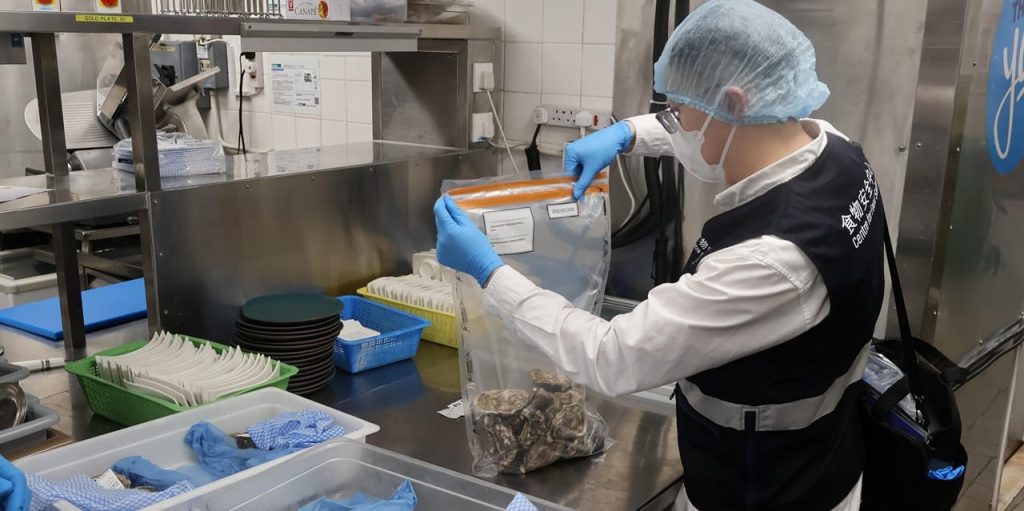
Prompted by the recent surge in food poisoning cases, the FEHD has stepped up inspections of food premises across Hong Kong. The focus of these visits included the storage temperature of raw oysters, storage conditions in designated refrigerators, the sources of supply, the personal hygiene of food handlers, hygienic condition of the premises, verifying source documents and health certificates, and collecting samples for testing. FEHD has inspected at least 430 sites selling oysters.
Rules state that raw oysters ready for consumption shall be kept in a refrigerator or compartment of a refrigerator separated from other food items at between 0 to 4 degrees C (32 to 39.2 degrees F).