
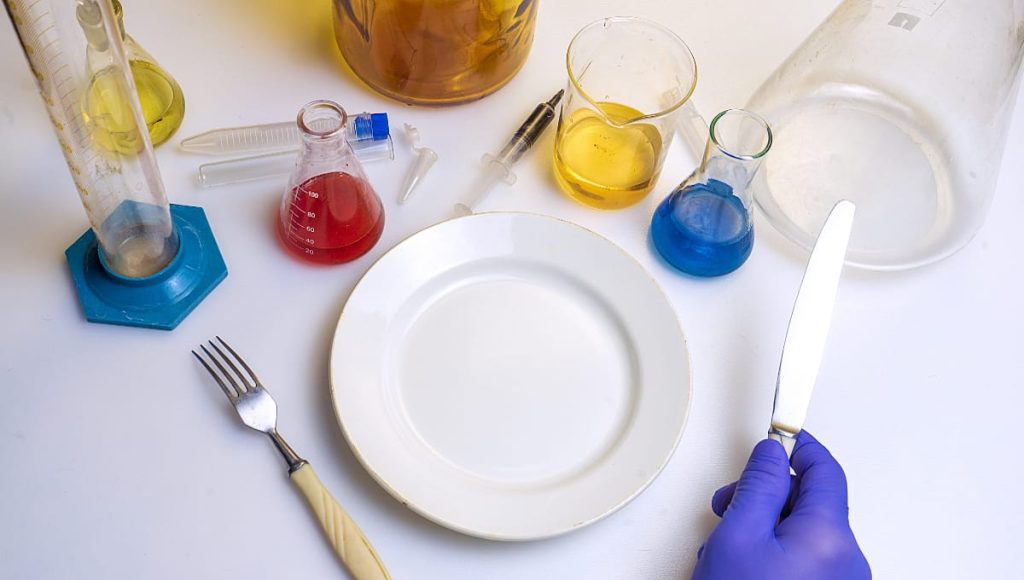
Quick bites from around the food safety arena
The Centers for Disease Control and Prevention (CDC) have linked 431 illnesses in 32 states to fresh jalapeño pepperscontaminated with Salmonella Javiana. The peppers were grown in Sinaloa, Mexico and distributed by San Diego-based Coast Citrus Distributors. More than 90 percent of the patients report eating at a Mexican-style restaurant before becoming ill, including Chipotle and QDOBA. The CDC and the U.S. Food and Drug Administration (FDA) are still investigating source and scope of the outbreak.The number of patients affected by multiple outbreaks of Cyclospora infections continues to grow. Efforts to identify where public health systems broke down in the midst of this and other crises have intensified as the end of summer draws near. NPR reports onthe cascading effects of funding cuts while the Brennan Center looks at the politics behind the delay in implantation of the food traceability rule.President Trump has nominated Dr. Heidi Overton to serve as the next commissioner of the Food and Drug Administration. Dr. Overton is currently deputy assistant to the president for domestic policy. Sen. Bill Cassidy, R-La., expressed “strong concerns” about Dr. Overton due, in part, to her support of what Cassidy called “a nonsensical vaccine executive order” issued by the President. Cassidy chairs the Senate health committee that must approve Overton’s nomination to advance to full Senate consideration. Food Safety News publisher Bill Marler has a to-do list ready for her, if she is confirmed.The UK Health Security Agency (UKHSA) is investigating a Salmonella outbreak that has sickened more than 200 people and caused one death. Testing revealed that patient samples are closely related, indicating a common source of contamination. The current outbreak could be related another one in 2025 that was linked to imported eggs.The UN’s Food and Agriculture Organization and International Atomic Energy Agency are partnering to assess the safety of edible insects and potential hazards associated with production and processing of said insects. About two billion people around the globe already consume insects regularly.
Today’s topic: GMOs
With all the attention these days to the broader category of food ingredients, it’s been easy to forget about genetically modified organisms, or GMOs.
The first year of genetically modified crop production was 1994, so genetically engineered (GE) crops, or agricultural biotechnology, are no longer new. Instead, GE crops now dominate because they’ve been engineered for resistance to insect damage, tolerance to herbicides and resistance to plant viruses
And the 25-year-old, San Francisco-based Center for Food Safety (CFS) has not forgotten its concerns about GMOs. It makes GE crops one of its major areas of work.
Past CFS court victories on GMOs have had nationwide impacts, preventing federal government attempts to completely deregulate GMO crops as they’ve become more routine.
Yet CFS claims that up to 70 percent of genetically modified food in supermarkets is not labeled at all, thanks to a loophole that allows ‘highly refined’ foods containing GMO ingredients to skip specific labeling.
CFS is back in court seeking to force companies to list all GMO ingredients on food packaging labels.
“This lawsuit is our best hope to ensure we know when we’re buying GMO products, but we’ll need all the support we can get in our long fight ahead,” CFS said in pitching its members to “overwhelm USDA [the U.S. Department of Agriculture] with comments.”
Just last week, USDA’s Animal and Plant Health Inspection Service (APHIS) asked for public comments on yet another GMO. It wants input about a petition from Pioneer Hi-Bred International Inc. to deregulate its COR-23134-4 soybean, developed using genetic engineering to control certain lepidopteran pests.
There are about 180,000 species of Lepidoptera, the insect order that includes moths and butterflies, many of which are harmful to soybean production.
Johnstown, IA-based Pioneer Hi-Bred International, Inc. makes and sells common hybrid seeds and genetically modified seeds, including those that become genetically modified food.
The public has 60 days to review and comment on the Pioneer petition and its draft Plant Pest Risk Assessment (PPRA). APHIS encourages submission of scientific data, studies or research in support of comments.
Comments on this GMO petition and draft PPRA can be submitted through October 19, 2026, via the Federal eRulemaking Portal. (Go to www.regulations.gov and enter “APHIS-2026-1090” into the “Search” field. Then, select the “Comments” button in the Notice contained in the list of documents.)
How GMOs are made
Plants, animals or microbes that have their DNA changed through genetic engineering techniques become genetically modified organisms.
Scientists use genetic engineering to isolate the gene for a desired trait from one plant or animal and insert it into the DNA of another.
Genes can be moved from an animal to a plant or vice versa.
Genetic engineering isn’t selective breeding. That involves selecting plants or animals with desired traits and breeding them through natural processes. In time, this results in offspring with those desired traits. But selective breeding can also result in undesirable traits.
Instead, genetic engineering allows scientists to select one specific gene to implant; genes with undesirable traits are avoided.
GMO foods are becoming more plentiful, with cotton, corn and soybeans as the largest GE crops in the United States. GE crops used in GMO foods include:
Corn syrup, used as a sweetener in many foods and drinksCorn starch, used in soups and saucesSoybean, corn, and canola oils, used in snack foods, breads, salad dressings and mayonnaiseSugar from sugar beetsLivestock feed
One or more of these foods are also involved in GE crops: apples, alfalfa, canola, papayas, pineapples, potatoes, salmon, squash, sugar beets, sugar cane and zucchini.
Currently banned in the EU?
GMOs are allowed in the EU, but the rules in place since 2001 are among the strictest in the world, and EU countries can ban GM crops from being cultivated on their territory.
While several GMOs are authorized for import into the EU, the only GM crop currently approved for cultivation in the EU is MON810, an insect-resistant maize variety grown mainly in Spain, primarily for animal feed.
GMO boosters point to increased crop yields, reduced chemical pesticide use, and enhanced nutritional value, while opponents cite potential ecological disruption, the development of herbicide-resistant weeds, and corporate control of the seed market.
At this time, major scientific and regulatory bodies—including the World Health Organization (WHO) and the U.S. Food and Drug Administration (FDA)—agree that GMO foods currently on the market are as safe to eat as their non-GMO counterparts.
The Pros: Why GMOs Are Used
Reduced chemical pesticide use: Crops engineered with Bt genes produce a natural protein toxic only to specific pests. This allows farmers to spray significantly fewer chemical insecticides. Climate and disease resilience: Scientists modify crops to withstand severe environmental stressors, including drought, extreme heat, and poor soil conditions. Genetic modifications also protect industries from devastating plant viruses, such as ringspot virus, which prevented devastation of papaya crops in Hawaii. Enhanced nutritional value: Bioengineering can directly combat malnutrition in developing regions. A prime example is Golden Rice, which is enriched with beta-carotene to prevent blindness caused by Vitamin A deficiency. Increased shelf life and food quality: Modifications can slow spoilage and browning processes in fresh produce (non-browning apples, for example), thereby directly reducing global food waste.
The Cons: Risks and Criticisms
Weed and insect resistance: While GMOs initially reduce pesticide use, the widespread cultivation of herbicide-tolerant crops has led to the emergence of “superweeds”. These weeds adapt to chemicals like glyphosate, forcing farmers to eventually use more toxic alternatives.Ecological and biodiversity risks: Cross-pollination (gene flow) can occur when wind or insects carry GMO pollen into neighboring wild or organic fields. This can unintentionally alter the genetics of native plant species and decrease overall biodiversity.Corporate monopolies and seed patenting: A small handful of large biotech corporations control the global GMO seed market. Because these seeds are patented, farmers are legally forbidden from saving seeds for the next year, forcing them into expensive, restrictive annual purchasing cycles.Public health anxiety: Although current research shows no verified health risks, critics emphasize that human clinical trials monitoring the strict long-term, multi-generational impacts of GMO diets remain limited.
Our Take
We probably all have a little voice in the back of our heads that tells us things. One of those messages is that we shouldn’t play God.
And it’s science that always pushes the line on that one. But in one case after another, science advances; whatever was a breakthrough becomes routine, and we push the line forward.
When something does hang around, it makes us nervous. Are those “superweeds” trying to tell us something? Superweeds are not mutated, aggressive plants but ordinary weeds that have adapted to survive new agricultural practices.
When kids from town were hired to “walk the beans,” we never imagined that a few naturally resistant weeds would take over.
By the numbers
40.6 – The percentage share of the global GMO economy that has been captured by the U.S. and Canada by 2026.
261,300,000,000 – The cumulative economic gain, in U.S. dollars, attributed to GMOs from 1996 to 2020.
52.3 – The percentage share of GMO benefits that have gone to farmers in developing countries during the same period. That amounts to $136.6 billion,
330,000,000 – The number of tons of soybeans that have been added to the global commodity supply base over a 25-year span, vastly expanding agricultural GDP due to GMOs. Hundreds of millions of tons of corn have also been added to the global supply.
581,000,000 – The amount, in kilograms, of pesticide spraying that has decreased due to GE crops producing their own targeted pest defenses.
90 — The percentage of U.S. corn, upland cotton and soybeans produced using GE varieties. GE crops are broadly classified as herbicide-tolerant (HT), insect-resistant (Bt), or stacked varieties that combine both traits.
What it means
While there was a time when people could seriously call for a ban on GMOs, that time is likely past. Over the past 32 years, GE crops and GE foods have become a significant part of the food and agriculture economy.
A Purdue University study projects a 22 percent hike in grocery prices would follow any total ban on GMOs in the food supply
The discomfort about the concept of GMOs persists because this multi-billion-dollar sector is dominated by a handful of global companies. Investments in R&D are massive.
While GE crops are unlikely to go away, some controversies remain.
Because biotech seeds are patented, farmers cannot legally save seeds from their harvest for next year. Annual seed purchases are required. This means agricultural wealth flows steadily from rural farming communities to the multinational biotech corporations.
And resistant superweeds require purchasing more expensive, heavier chemical options and specialized spraying equipment just to maintain baseline yields in some areas.
A relatively new threat is accidental cross-contamination with non-GMO fields. That can instantly disqualify a farmer’s crop from premium export markets such as the European Union, causing localized trade losses.
Do you have any comments, questions or suggestions for future coverage? Click here to give us your feedback.