
The latest data on food irradiation in Europe shows use of the technique is continuing to go down.
Every year, member states forward results to the European Commission of checks carried out in ionizing irradiation facilities, including the categories and quantities of foodstuff treated and the doses used, as well as findings from checks at the product marketing stage. Irradiating does not result in radioactivity in food.
A recently released report covers January 2022 to December 2023. There are 23 approved facilities in 13 EU member states. No factories closed during the period.
France and Germany both have five while Bulgaria and the Netherlands each have two. There is one site each in Spain, Belgium, Czech Republic, Croatia, Estonia, Italy, Hungary, Poland, and Romania.
Irradiation by product and country
Almost 4,200 tons of foodstuffs were treated with ionizing irradiation in EU member states during 2022 and 2023. This is lower than 5,029 tons in 2020 to 2021 and 7,832 tons in 2018 and 2019.
Analysis took place mainly in Belgium, which treated 2,934 tons, or 69.9 percent, of the irradiated food in Europe. Germany was second with 734 tons while Romania only treated 8 tons.
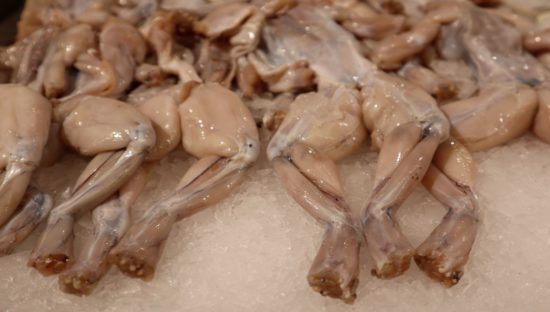
The main commodities irradiated were frozen frog legs, dried aromatic herbs, spices and vegetables seasoning, and mechanically recovered poultry meat.
Food irradiation is the treatment of foodstuffs by ionizing radiation. It does not make food radioactive. Irradiation is used for sanitary and phytosanitary purposes to kill pathogenic bacteria such as Salmonella, Campylobacter and E. coli that can cause food poisoning and to eliminate organisms harmful to plant or plant products such as insects and other pests.
It is also used to delay fruit ripening, to stop vegetables from sprouting or germinating, and to extend shelf life. It cannot replace proper food handling and irradiated foods still require appropriate refrigeration and cooking prior to consumption.
Market controls
Any irradiated food or food ingredient must be labeled with “irradiated” or “treated with ionizing radiation.”
A total of 7,205 samples were analyzed by 20 member states to detect ionized foodstuffs at the marketing stage. More than 60 percent of these were done by Germany.
Cyprus and Greece did no checks because they lacked laboratory capacity, and Estonia had staff restrictions. There were also no checks by Denmark. The main products tested were herbs and spices followed by cereals, seed, vegetables, fruit and their products.
Overall, 51 were not compliant and 105 gave inconclusive results. The non-compliances were mainly incorrect labeling and forbidden irradiation. The percentage of non-compliance was slightly lower than in 2020 to 2021.
The U.S. Food and Drug Administration has approved various foods for irradiation, including beef and pork; crustaceans such as lobster, shrimp, and crab; fresh fruits and vegetables; lettuce and spinach; poultry; shell eggs; spices; and seasonings.
(To sign up for a free subscription to Food Safety News, click here.)