
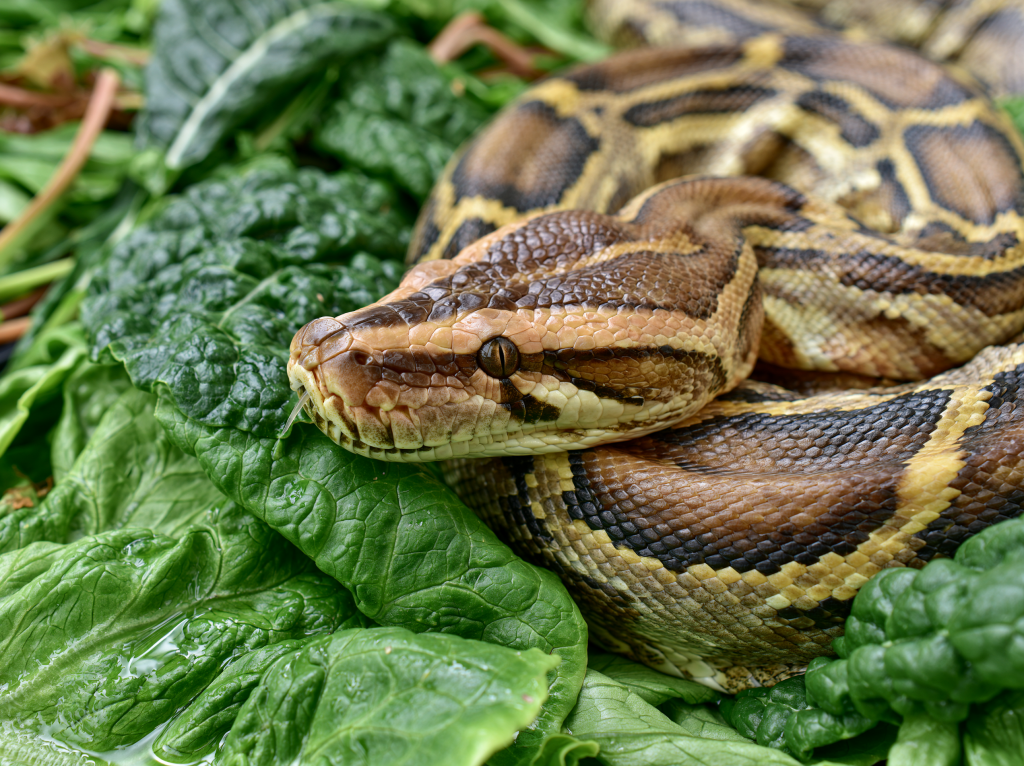
There’s a snake in the Everglades that no one native to Florida ever asked for. The Burmese python didn’t slither up from the Caribbean or ride a hurricane in from Asia. We brought it — through the pet trade, a handful of released and escaped animals in the 1980s and ’90s that found a warm, wet, predator-free paradise and did what invasive things do. Now there are tens of thousands of them, the marsh rabbits and foxes and bobcats they’ve swallowed aren’t coming back, and no amount of bounty hunting will round up the last one. The bell doesn’t un-ring. Warming climates only widens the door: pythons are cold-sensitive, historically pinned to the southern tip of the state by hard freezes, but their range has been creeping north and there’s already evidence their genome is adapting to tolerate cold. Scientists still argue about how far they’ll ultimately spread — some models say much of the South, others say the habitat actually shrinks — but nobody argues about how they got here. We did that.
I keep thinking about that snake when I look at this summer’s Cyclospora numbers, because we are running the same play on the food supply.
Cyclospora used to be a passport problem — imported produce and travel to the tropics. Not anymore. It now turns up in domestically grown produce, the case counts have climbed decade over decade, and the FDA and CDC were worried enough to stand up a Cyclospora Task Force back in 2019. The science is careful with the word, but the direction isn’t subtle: this parasite is trending toward endemicity. Trending, in plain English, toward living here.
And here is where we outdo even the python. We spent two decades watching that population explode and calling it somebody else’s problem. With Cyclospora, we’ve done something dumber — we turned off the camera. On July 1, 2025, the CDC dropped Cyclospora from FoodNet’s mandatory tracking, shrinking the list of pathogens the country actively hunts for from eight down to two. We didn’t just accept an emerging invader. We stopped counting it, on purpose, the summer before it did this.
Because this is what “this” looks like: more than 3,000 people sickened across Michigan and Ohio, the worst of it in a state that logs 40 or 50 cases in a normal year. Michigan has finally named lettuce and salad greens as its leading suspect. And the two federal agencies that are supposed to find the contaminated lot? Their product columns are blank — no advisory, no recall, no named food, traceback merely “initiated.” That is not what vigilance looks like. That is what looking away looks like.
Yes, the climate is in this story. Cyclospora’s oocysts need warm, wet days to ripen into something infectious, and a warming, wetter growing season lengthens and intensifies that window — the same way warmth is inching the python’s door open. But warmth is the accelerant, not the arsonist. Every Cyclospora case on earth traces back to human waste reaching human food or water; the parasite has no animal reservoir, no wild swamp to breed in. It is a human problem start to finish. And the surveillance blackout isn’t weather — it’s a budget line. You cannot un-ring this bell any more than you can empty the Everglades of snakes; you do not recall an endemic parasite. But you can at least keep watching for it. We decided not to.
The families living through this outbreak — weeks of watery, relapsing, hollowing illness, kids and grandparents in emergency rooms hooked to IV fluid — are not victims of bad luck or bad weather. They are victims of a preventable thing we chose to stop tracking. The python teaches the lesson we keep refusing to learn: the cheapest moment to act on an invader is before you’ve resigned yourself to it as permanent. With Cyclospora, we’re not even doing the watching.
We made the Everglades a python buffet by looking away for twenty years. We’re setting the salad bar up the same way — one defunded surveillance program at a time.