
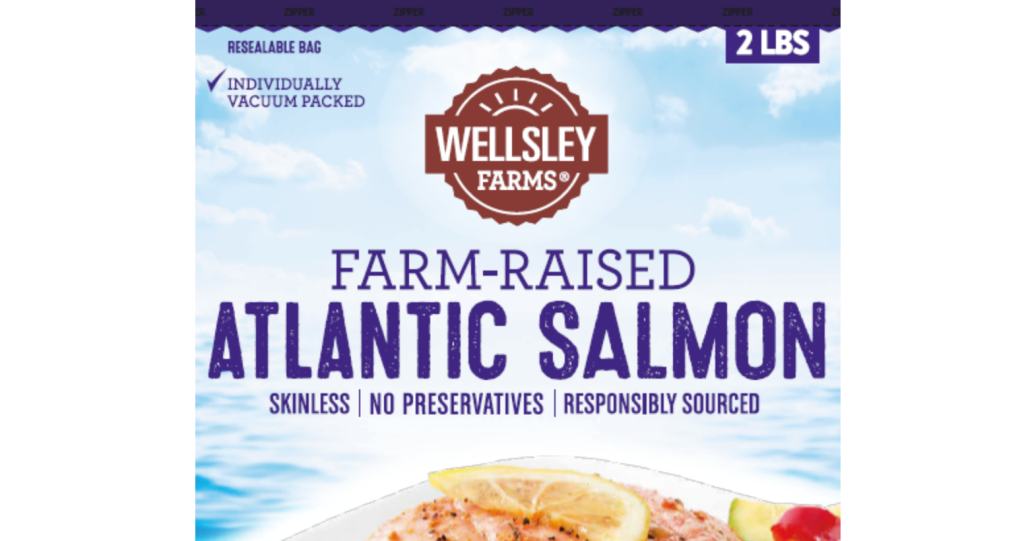
Slade Gorton & Co. Inc., is recalling lot 3896 of Wellsley Farms Farm-Raised Atlantic Salmon because it is contaminated with Listeria monocytogenes.
The recalled product was sold only in BJ’s Wholesale Club stores in Delaware, Maryland, New Jersey, New York, North Carolina, Pennsylvania and Virginia from Jan. 31 through Feb. 7. It is packaged in 2-pound bags with the Wellsley Farms logo and Farm-Raised Atlantic Salmon on the front. The UPC code (888670025963) and recalled lot number (3896) are on the reverse of the bag, below the cooking instructions and Nutrition Facts panel.
The presence of Listeria monocytogenes was found through a sample collected randomly by the Food and Drug Administration. Slade Gorton & Co. Inc, is investigating how the contamination occurred and taking steps to keep it from happening again.
BJ’s Wholesale Club is directly notifying its members who may have purchased the recalled product.
No illnesses have been reported to date.
About Listeria infections
Food contaminated with Listeria monocytogenes may not look, smell or taste spoiled but can still cause serious and sometimes life-threatening infections. Anyone who has eaten any of the recalled salmon and developed symptoms of Listeria infection should seek medical treatment and tell their doctors about the possible Listeria exposure.
Also, anyone who has eaten any of the recalled products should monitor themselves for symptoms during the coming weeks because it can take up to 70 days after exposure to Listeria for symptoms of listeriosis to develop.
Symptoms of Listeria infection can include vomiting, nausea, persistent fever, muscle aches, severe headache, and neck stiffness. Specific laboratory tests are required to diagnose Listeria infections, which can mimic other illnesses.
Pregnant women, the elderly, young children, and people such as cancer patients who have weakened immune systems are particularly at risk of serious illnesses, life-threatening infections, other complications and death. Although infected pregnant women may experience only mild, flu-like symptoms, their infections can lead to premature delivery, infection of the newborn, or even stillbirth.