
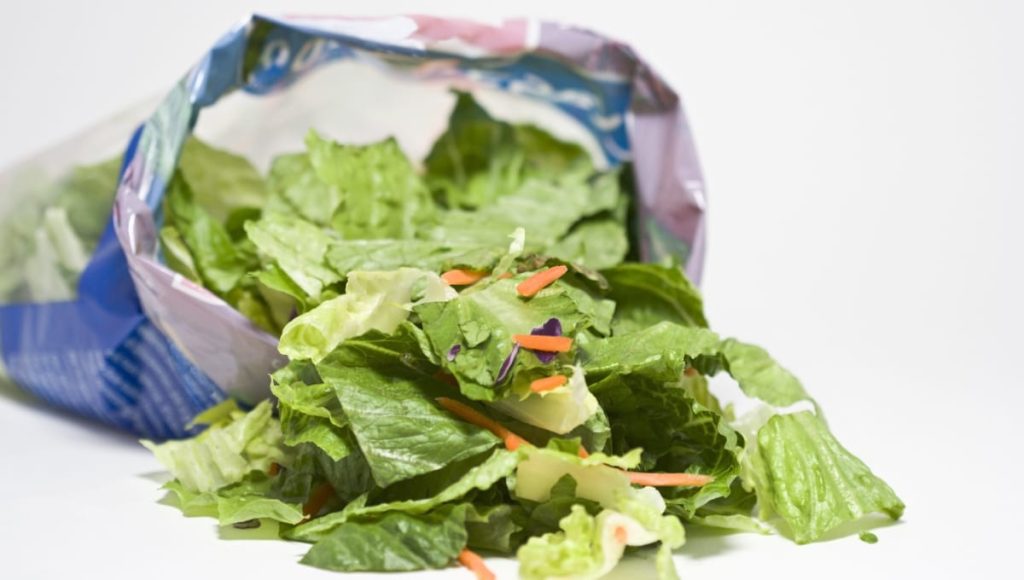
Public health officials in Michigan believe that lettuce or salad greens are behind a cyclospora outbreak that has sickened 2,640 people in their state alone.
The Michigan Department of Health and Human Services (MDHHS) reports that its investigation is ongoing and other food items cannot be completely ruled out. No specific type of produce, grower or supplier has been identified as the source of the parasite, which is a microscopic creature.
“Although we do not have a definite product identified as the source of the outbreak, we want to let Michiganders know what we have learned so far so they can take steps to protect their families,” said Dr. Natasha Bagdasarian, chief medical executive in Michigan.
“Early information has shown lettuce as a common product that regularly comes up during the investigation. We will continue to provide updates as we learn more.”
Typically, Michigan only records 40 to 50 cases of cyclosporiasis annually.
The outbreak has sickened people in 31 states, with Ohio reporting 364 patients and New York reporting 470. The Centers for Disease Control and Prevention is lagging behind in posting nationwide numbers, reporting only
843 confirmed cases and more than 1,500 suspected cases. The CDC last updated its count on July 9.
The CDC’s count is likely because it stopped tracking cyclospora illnesses in 2025 when changes implemented by the Trump Administration were put into place.
Cyclospora is a parasite that infects the intestines and causes watery diarrhea, nausea, and stomach cramps. It is usually contracted by eating or drinking something contaminated with the parasite. MDHHS continues to work closely with local health departments to conduct in-depth interviews of individuals testing positive for cyclosporiasis, as well as with other state and federal partners to conduct traceback investigations. More than 1,000 interviews have than have been completed to date in Michigan.
The incubation period for cyclospora infection to begin to show symptoms is up to two weeks after exposure. Michigan officials said because of complex food distribution networks across the state and country, it will take some time for agencies to complete their investigation.
“Recreational water exposure, such as swimming in lakes, is not a recognized risk factor for cyclosporiasis and there is currently no evidence linking recreational water activities to this outbreak,” according to the Michigan Department of health.
“While people should always avoid swallowing recreational water, foodborne exposure – particularly exposure to contaminated produce – remains the primary focus of this outbreak investigation.”
Given early information and the historical link between cyclospora and pre-packaged salad greens, MDHHS recommends adopting the following lettuce-specific safety measures:
Purchase whole heads: Buy whole heads of lettuce rather than pre-washed, bagged lettuce or pre-mixed salad kits. Discard outer layers: Before preparation, throw away the outer two to three layers of leaves. Wash inner leaves: Thoroughly wash the remaining inner leaves under clean running water. It has not been proven that washing will remove the parasite, but it can remove dirt and debris that contains the parasite.Prioritize cooking: For any greens that can be cooked, cooking to a temperature of at least 158 degrees F (70 C) is the safest option, as the parasite is resistant to routine chemical disinfection and washing alone cannot guarantee its removal.
The following foods have been specifically linked to previous cyclospora outbreaks in the United States and Canada:
Bagged salad mixes and kits. Fresh cilantro (coriander leaves). Fresh basil. Rasberries.Snow peas. Green onions (scallions).
Anyone who has developed symptoms of Cyclospora infection, and has reason to believe they have been exposed to the parasite, should seek medical attention. Specific tests are required and antibiotics are used to fight the parasite.
Cyclospora infection can cause severe abdominal pain, watery diarrhea, nausea, vomiting, body aches, and fatigue. Symptoms can develop between two and 14 days after exposure. Without treatment, systems can last a month or longer.